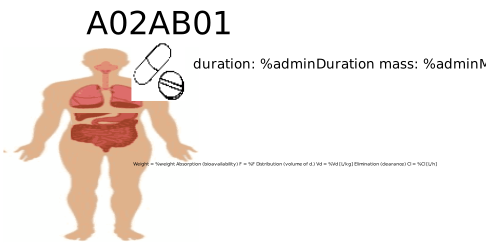
modelA02AB01
Extends from Pharmacokinetic.Models.PK_1C_enteral.
Information
| name: | AluminiumHydroxide | |
| ATC code: | A02AB01 | route: | oral |
| compartments: | 1 | |
| dosage: | 500 | mg |
| volume of distribution: | 0.1 | L |
| clearance: | 0.001 | L/min |
| other parameters in model implementation | ||
Aluminium hydroxide is an inorganic compound commonly used as an antacid for the symptomatic relief of heartburn, acid indigestion, and peptic ulcers. It works by neutralizing excess stomach acid. It has also been used as a phosphate binder in patients with chronic kidney disease, though this use has declined due to potential toxicity. It is an approved and widely used over-the-counter medication.
Pharmacokinetics
No formal published pharmacokinetic model parameters are available for aluminium hydroxide in humans, as absorption from the gastrointestinal tract is minimal and it acts locally in the stomach. The following estimates are provided based on general knowledge of the drug's pharmacology and information from non-specific sources.
References
Scott, G, et al., & Rordorf, C (2004). Lack of effect of omeprazole or of an aluminium hydroxide/magnesium hydroxide antacid on the pharmacokinetics of lumiracoxib. Clinical pharmacokinetics 43(5) 341–348. DOI:10.2165/00003088-200443050-00006 PUBMED:https://pubmed.ncbi.nlm.nih.gov/15080766
Kooistra, MP, et al., & Marx, JJ (1998). Iron absorption in erythropoietin-treated haemodialysis patients: effects of iron availability, inflammation and aluminium. Nephrology, dialysis, transplantation : official publication of the European Dialysis and Transplant Association - European Renal Association 13(1) 82–88. DOI:10.1093/ndt/13.1.82 PUBMED:https://pubmed.ncbi.nlm.nih.gov/9481720
Parameters
| Type | Name | Default | Description |
|---|---|---|---|
| Modelica.Units.SI.Mass | weight (from PK_1C) | 75 | patient weight (kg) |
| Modelica.Units.SI.SpecificVolume | VdPerKg (from PK_1C) | 0.9 | Volume of distribution (L/kg) |
| Modelica.Units.SI.MassFraction | F (from PK_1C) | 0.8 | bioavailiability (0-1) |
| Pharmacolibrary.Types.Clearance | Cl (from PK_1C) | 20 | clearance |
| Modelica.Units.SI.Time | adminTime (from PK_1C) | 60 | first administration time (s) |
| Modelica.Units.SI.Time | adminDuration (from PK_1C) | 600 | administration duration (s) |
| Modelica.Units.SI.Time | adminPeriod (from PK_1C) | 8*60*60 | period of administration (default 8 hours)(s) |
| Pharmacolibrary.Types.Mass | adminMass (from PK_1C) | 1000 | administration mass (mg) |
| Integer | adminCount (from PK_1C) | 8 | number of dose administered (1) |
| Pharmacolibrary.Types.Volume | Vd (from PK_1C) | VdPerKg*weight | Volume of distribution (m3) |
| Pharmacolibrary.Types.MassConcentration | Cmin (from PK_1C) | 0.004 | minimal therapeutic range |
| Pharmacolibrary.Types.MassConcentration | Cmax (from PK_1C) | 0.008 | minimal therapeutic range |
| Pharmacolibrary.Types.MassConcentration | Ctox_peak (from PK_1C) | 0.012 | toxicity peak level |
| Pharmacolibrary.Types.MassConcentration | Ctox_trough (from PK_1C) | 0.006 | toxicity trough level |
| Pharmacolibrary.Types.TransferRate | ka (from PK_1C_enteral) | 0.016666666666666666 | first order absorption rate |
| Modelica.Units.SI.Time | Tlag (from PK_1C_enteral) | 600 | delay between oral administration and absorption (default 10min) |
Connectors
| Type | Name | Default | Description |
|---|---|---|---|
| Types.ConcentrationOutput | C_central (from PK_1C) | ||
| Interfaces.ConcentrationPort_b | centralCPort (from PK_1C) |
Components
| Type | Name | Default | Description |
|---|---|---|---|
| Pharmacokinetic.NoPerfusedTissueCompartment | central (from PK_1C) | ||
| Pharmacokinetic.ClearanceDrivenElimination | elim (from PK_1C) | ||
| Sources.PeriodicDose | periodicDose (from PK_1C) | ||
| Modelica.Units.SI.Time | t1_2 (from PK_1C) | elimination half-life |
Revisions
- 06/2025 Tomas Kulhanek, generated model from data extracted from PUBMED, DrugBank and LLM(GPT4.1)